
The Payments/Banking Industry in Brazil
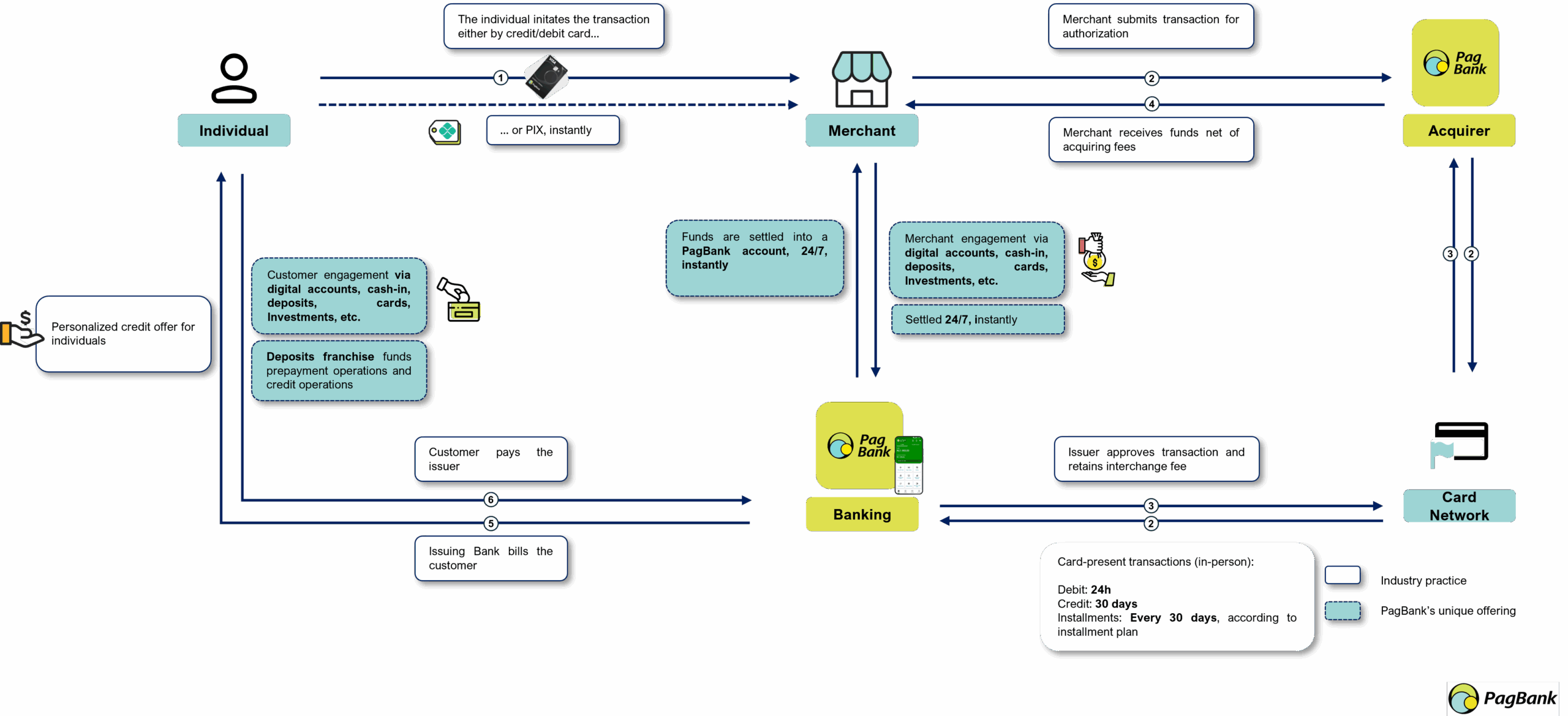
Brazil’s card payments market features a unique settlement and consumption structure.
A defining characteristic of the market is the widespread use of interest‑free installments (“parcelados”), which represent roughly 50% of credit card purchases. In these transactions, merchants receive proceeds in line with the installment schedule, further extending cash conversion cycles.
Prepayment of receivables (advance settlement) plays a central role in addressing merchants’ working capital needs as micro, small and medium-sized businesses (MSMBs) remain underserved by traditional credit providers, with limited access to competitive financing alternatives.
Prepayment is among the most efficient and accessible funding source for MSMBs and show high penetration across merchant base.
Business needs such as working capital, inventory purchases, and equipment financing open room for upselling payroll loans, insurance, card acceptance, and digital POS solutions. Credit products act as an entry point for broader engagement with PagBank’s full-service platform, bundling credit, banking and payments in a single, integrated journey.
PIX drove incremental payment volumes by enabling instant, low‑friction transactions, particularly in use cases where card penetration had historically been lower. Rather than substituting card‑based payments, PIX complements existing payment rails, expanding the overall addressable market while accelerating digital engagement.
By bringing new users and transactions into the financial ecosystem, PIX increased monetization opportunities across channels and strengthened long‑term platform economics. PIX usage grew steadily and now represents more than 50% of all transactions initiated in the Brazilian Payments System, or 28% of the total financial volume.